Read benchmarks as clues
A benchmark shows performance on a defined test. It does not guarantee reliability on your data, workflow or risk level.
Model announcements compress many trade-offs into one launch score. A useful comparison separates capability, reliability, speed, cost, control and fit for the actual workload. Start with the answer-comparison scorecard, then work through release checks and document-retrieval failure cases.
A benchmark shows performance on a defined test. It does not guarantee reliability on your data, workflow or risk level.
Retrieval, prompts, tools, permissions and review steps often determine quality as much as the underlying model.
Keep a stable evaluation set so model, prompt and data updates can be compared against the same acceptance criteria.
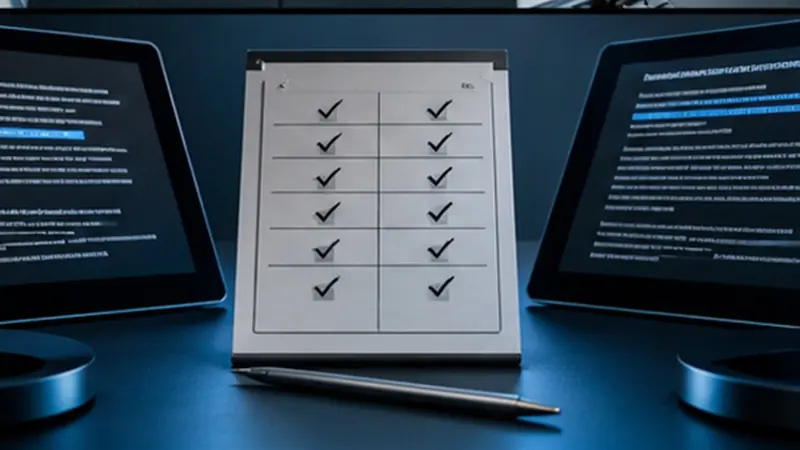
To compare AI answers, use the same task and sources, then score evidence, completeness, uncertainty, usefulness and permissions. A fluent answer must still fail if it invents authority to act. The 20-point worksheet below includes two fictional answers, source records and an answer key.

An AI release can pass 99 of 100 checks and still be unsafe to launch if the remaining failure breaks a critical boundary. Define blocking failures before testing, report results by failure type and plan a rollback. The 99-of-100 example here is hypothetical, not a measured product result.
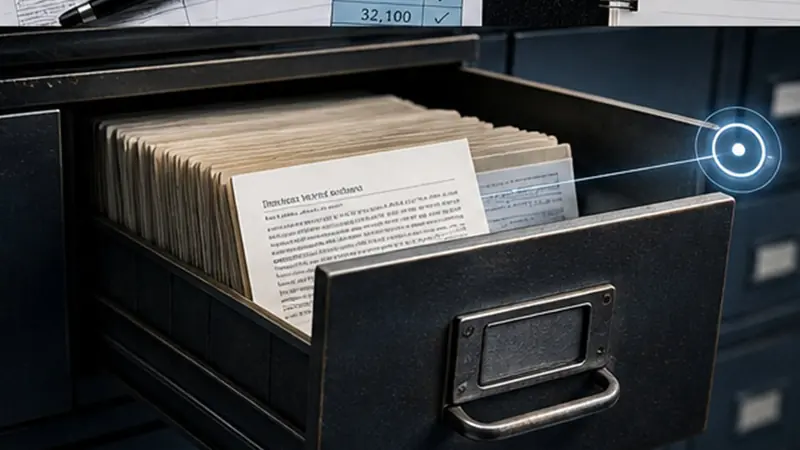
Our synthetic selector passed its original eight document cases, then failed four of five additional probes involving bad or contradictory source records. Inspect both sets of inputs and outputs to see what version, audience and citation checks do—and what they leave untested.