Five questions, and no final rule yet
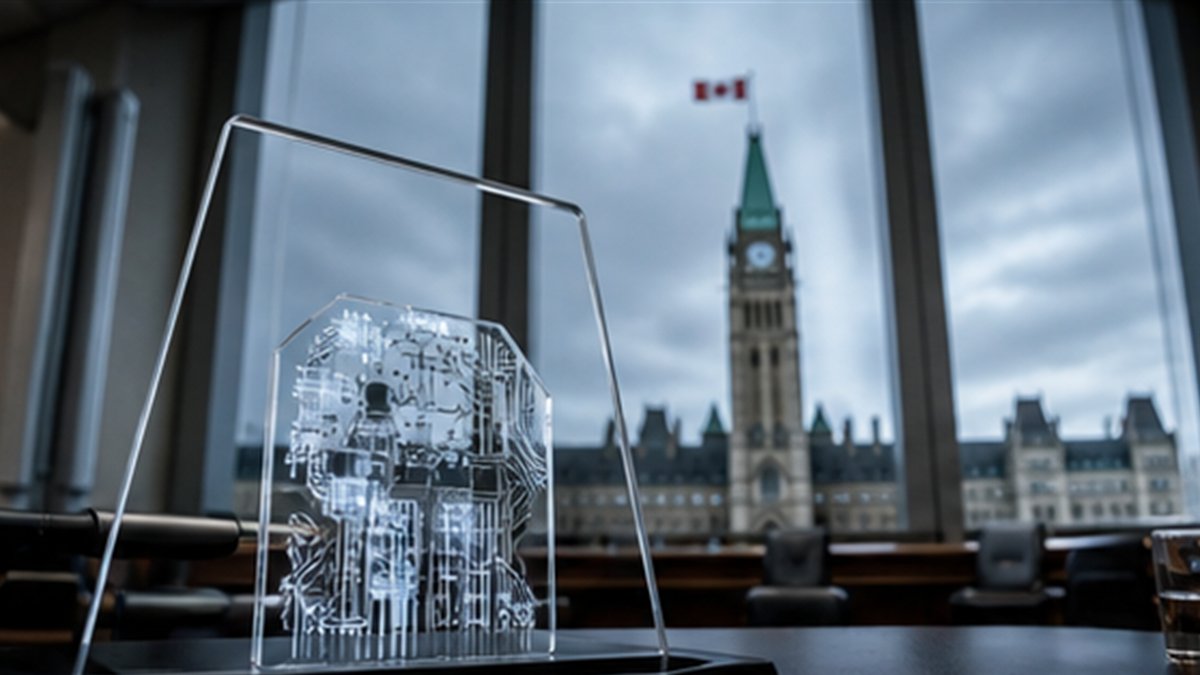
Canada has opened a real debate about AI notices, synthetic-content labels and activity records. It has not settled the wording, thresholds or enforcement. That difference gets lost in a quick reading of the announcement.
Our proposal-versus-rule test separates five transparency needs and turns one delivery failure into a comment with a privacy limit.
Prepare a focused consultation comment that identifies a user, a failure and the information that would help.
Keep in mind: The delivery assistant and response structure are illustrations, not government-approved notices or legal requirements.
In this article5 sections
Editorial note: This is a reading of the federal consultation documents, not a statement of current law. The delivery-assistant notice is an AI New Canada example. Check the linked government pages for any change in status.
The deadline is real; the proposed rules are not final
As checked on September 23, 2026, ISED’s participation page still lists the consultation as open through September 23. It does not publish a time-of-day cutoff there, so do not infer one. The discussion paper asks how transparency should work; it does not enact those measures. Check the official participation page for its current submission route and status before sending anything.
The useful contribution is a concrete failure and a workable remedy. “AI should be transparent” leaves almost every design question unresolved. A customer who needs to correct an automated interaction, a journalist checking synthetic media and an investigator reconstructing an incident need different information. We read the five consultation areas with those different users in mind.
A delivery assistant shows why a label can be insufficient
Imagine a fictional shop assistant that can answer delivery questions but cannot change an address. A customer asks it to redirect a parcel. “This conversation uses AI” is true, yet it does not answer the customer’s most important question: did the address change?
A useful interface would separate the request from the completed action. It could explain that no change has been made and route the customer to the authorized service. If the assistant can perform the change, the customer instead needs the destination, confirmation and a correction route. Our example illustrates why disclosure and transaction evidence solve different problems.
In a consultation response, describe the point of confusion and who bears its cost. Then propose the minimum information needed at that moment. A proposal to publish every conversation would create a different problem by exposing private details. More information is not automatically better transparency.
Write one comment somebody can evaluate
Choose one of the five areas. Describe a situation you actually know, without including confidential records or presenting an invented case as an experience. Explain what the affected person needs to decide. State a proposed obligation, where it would appear and what should happen when it fails.
Add a trade-off. For example, explain how a notice could remain usable on a small screen or how a record could be available to an authorized reviewer without becoming public. A response that acknowledges implementation costs is easier to assess than a demand for perfect visibility everywhere.
Area: interaction notice. Problem: users may mistake a delivery conversation for a completed address change. Proposed outcome: distinguish requested, approved and completed changes in the interface. Evidence to retain: transaction identifier and result. Privacy limit: do not publish the customer’s address. Question for policymakers: which party must provide the correction route when several services are involved?Before submitting, remove information you would not publish
ISED’s participation page offers a survey and an email route and warns that submissions are public documents that may be posted online. Use the official page for the current contact details. Do not attach customer messages, personal identifiers or a private incident report merely to make the example vivid.
After the consultation closes, a submission deadline should be described in the past tense. A later summary of responses would still need to be distinguished from an enacted requirement. When citing this article after September 23, check the official page for the next stage rather than assuming the consultation remains open.
privacy check before sharing filesReduce the personal information in any example you send.
Continue with the original sources
These claim-relevant primary and first-party references support the reporting above. Open them for technical detail, current requirements and subsequent updates.
- canada.caCanada's AI transparency consultation ↗The official July 23 announcement, including the consultation dates and the five subjects on which Canada requested feedback.
- ised-isde.canada.caISED discussion paper: Enhancing trust in AI through increased transparency ↗The government discussion paper that frames the transparency questions; it is consultation material, not a final rule.
- ised-isde.canada.caISED: Have your say on advancing AI transparency in Canada ↗The official participation page for the consultation scheduled from July 23 to September 23, 2026.
Finished reading? Save that here without waiting for a timer.
September 23: rechecked the official consultation status and clarified the published deadline without assuming a time cutoff.
See something we should fix or clarify? Read the corrections policy or tell the newsroom. Material changes are noted here.